
Project AgGrad is designed to ensure that students will return to areas of great need and will be in place to provide a multiplying effect as they teach, mentor, conduct research, and offer leadership in their communities and nations.
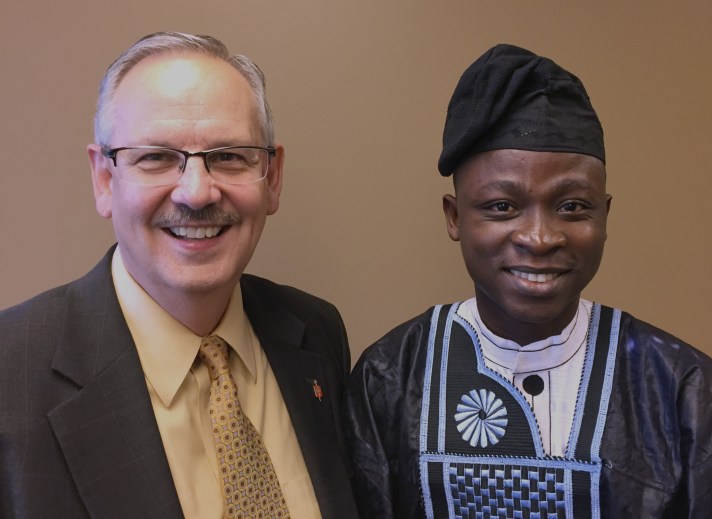
The project is a collaboration between the Minnesota Annual Conference of the United Methodist Church and the University of Minnesota. The project was initiated by the Minnesota Annual Conference in response to a 1983 Council of Bishops’ letter asking for responsible, targeted programs to meet the increasing demands of World Hunger.

Our Past Fellows
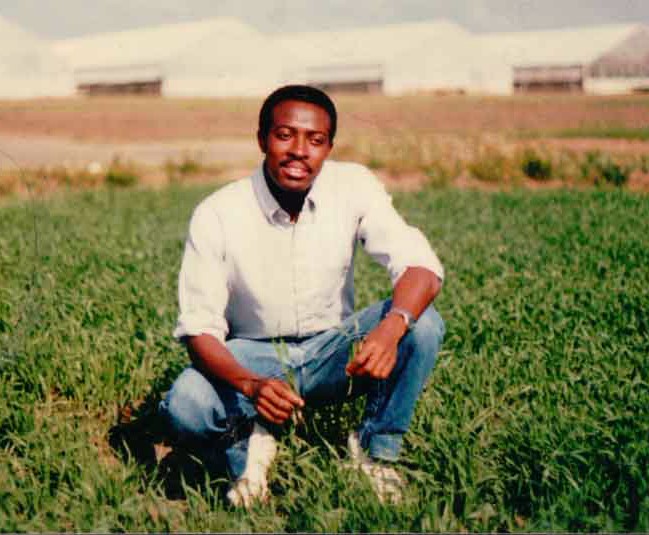
1. Gbadebo Olaoye, Ph.D. in Plant Breeding, 1990. Dr. Olaoye is a Professor of Plant Breeding, Department of Agronomy and Associate Research Fellow, Unilorin Sugar Research Institute, University of Ilorin, Nigeria. His research interests include development of drought tolerant varieties (sugarcane) and stress (drought, striga, stem borer, low soil-N) tolerant maize varieties. As a lecturer, he designed undergraduate and post-graduate courses in plant breeding, and also supervised several undergraduate and graduate (M. Sc. & Ph D) students’ projects. Research activities in collaboration with national and international research institutions have resulted in the release of several maize varieties targeted to specific stress factors in Nigeria agro-ecologies. He has published over 70 articles in local, national, and international journals related to his work. He has served in various administrative capacities in the University including Director (Sugar Research Institute); Head (Department of Agronomy) and Dean (Faculty of Agriculture). Now retired from active service in July, 2021, he is still involved in promoting improved agricultural technology among the farmers and as a Consultant with GOLDAGRIC Seeds Ltd, Kaduna, Nigeria.
2. Kingsley Ayisi, Ph.D. in Agronomy, 1994. Dr. Ayisi is the Director and Senior Ago-Ecologist, African GeoEnvironmental Services in South Africa.“The focus of my professional activities in recent years includes…development of land use and business plans for the Department of Land Affairs in Land Restitution programs in South Africa…a new venture in Ghana for the establishment of plantations for biofuel productions… and other projects.”
3. Tsitsi Ndowora, Ph.D. in Plant Pathology, 1998. Dr Tsitsi holds a PhD in Plant Pathology (Virology) and MSc in Plant Pathology from the University of Minnesota, USA and a BSc in Crop Science (Honors) from the University of Zimbabwe. She works with microorganisms as plant pathogens and in harnessing the ecosystem services offered by microbes for plant health improvement. Her research focuses on improving plant resistance to plant pathogens and diseases that is premised on “healthy” soil as the foundation of plant health by augmenting soil and plant microbiomes for plant health. In selecting for and introducing biocontrol microorganisms as well as promoting cropping practices that favor the proliferation of plant growth-promoting microbes her research work promotes the use of native naturally occurring microbial resources that promote resilient and sustainable cropping systems. Since her return to Zimbabwe, she has worked in the fields of plant virus diagnostics and management; indigenous and marginalized African crops for food and nutrition security; organic agriculture and certification thereof as well as in the natural products space. She is currently a Lecturer at the University of Zimbabwe where she supervises students and teaches microbiology and plant pathology courses at undergraduate and MSc Levels.
4. Jenipher Bisikwa, Ph.D. in Applied Plant Sciences (Agronomy/Weed Science). Dr. Bisikwa is an Academic staff in the School of Agricultural Sciences at Makerere University, Kampala, Uganda. She is actively engaged in research, training, outreach and community-based research activities focusing on the management of crop production constraints using participatory approaches. She has been involved in several research projects in collaboration with partners from other countries including USA and UK, and co-supervised graduate students/published scientific papers in peer reviewed Journals. As a Team Leader, she has been involved in participatory development and dissemination of appropriate agronomic packages under diverse farming systems in Uganda. She has also been recognized as a Distinguished Career Mentor for dedication and commitment to Excellence in Mentoring, African Women in Agricultural Research and Development (AWARD) under CGIAR Gender & Diversity Program. Mentorship and Gender/youth-responsive approaches have been key areas of her work experience since 2005 under Gender and Diversity Program funded by the Rockefeller Foundation and AWARD Program funded by the Gates Foundation. Mentoring both young women and men Agricultural scientists has become her lifelong passion because of its multiplier effect and impact. Currently, Dr. Bisikwa is one of the Trainers under GREAT (Gender-responsive Researchers Equipped for Agricultural Transformation) Project, implemented by Makerere University, Uganda in partnership with Cornell University in the USA, where Agricultural researchers around the world are equipped with gender and youth-responsive tools that aid Research Design and Implementation along the crop value chain to benefit both men and women farmers and other stakeholders. She has trained Agricultural Researchers in Sub-Saharan Africa, North Africa, South-East Asia and Latin America in Gender and youth-responsive Agronomic solutions including climate smart agriculture and resilient seed systems. Apart from her academic and research career, Dr Bisikwa is involved in community-based initiatives targeting the girl child education enhancement and helping vulnerable communities including single/widowed mothers and their children. She is an active member in her Church Community and has sponsored an orphan girl for the past 8 years. The training and research experience received from University of Minnesota and the gifting spirit from the United Methodist Church Community via Project AgGrad positively influenced her career and continues to benefit people in her home country.
5. Toi John Tsilo, Ph.D. in Applied Plant Sciences, 2009. After finishing postdoctoral research, Dr. Tsilo returned to South Africa where he works for the Agricultural Research Council. “I lead a comprehensive research in cereal breeding and biotechnology. He holds an adjunct appointment with the University of the Free State as a Senior Lecturer and trains both Masters and Ph.D. students on a range of topics including Plant Genomics, Molecular Genetics and Biotechnology for the improvement of cereal crops, and is the Editor and Associate Editor of several journals.”
6. Cathrine Ziyomo, Ph.D. in Agronomy and Plant Genetics specializing in maize improvement for drought and low nitrogen tolerance. Upon completion of her PhD, Dr. Ziyomo returned to Zimbabwe and worked as a maize breeder for Dupont Pioneer (Now Corteva). She served as leader for the Biosciences for Africa (B4A) program at the International Livestock Research Institute in Nairobi and has trained over 200 breeders in Africa areas where modern biosciences applications hold promise in crop improvement.
Today, she is running her own company in Africa developing seeds for underutilized crops—ground nuts, sesame, sugar beans and sunflowers. She’s also focusing on the biofortification of legumes to improve health and nutrition for rural people who cannot afford meat protein. You can read the complete story at https://www.minnesotaumc.org/newsdetail/former-project-aggrad-student-addre%20sses-hunger-in-africa-thanks-minnesota-united-methodists-18686041.
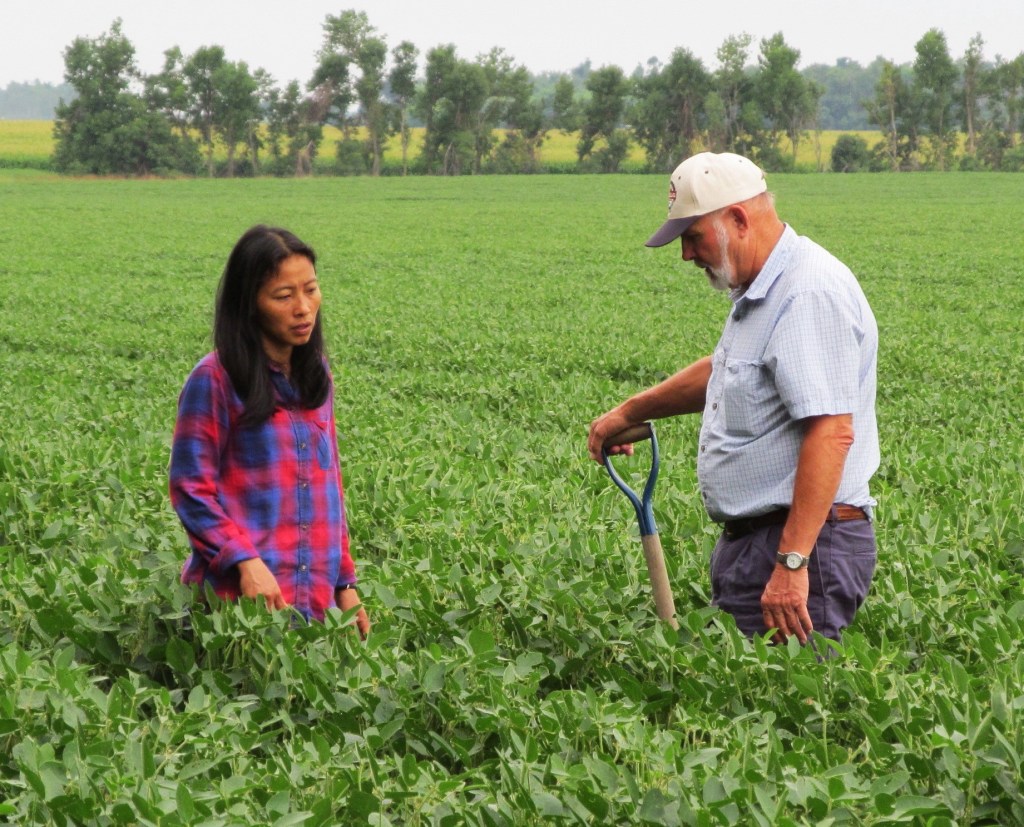
7. Samadangla Ao, Ph.D. in Applied Plant Sciences (Agronomy/Agroecology). Samadangla was our first Project AgGrad student from India. Her home village is in a rural area of Nagaland, Northeast India. She is currently an Assistant Professor of Botany at Kohima Science College, Jotsoma, Nagaland. Since returning to her country, she guided eight Master degree students and presently supervising two Ph.D. students. Along with her students she works with smallholder farmers in her home town to improve their farming system and local food security. The agricultural research experience and education she received at the University of Minnesota is greatly benefiting people in her home country.
8. Emmanuel Adeyemo, Ph.D. in 2021. “My vision for Nigeria is that of a country that is self-sufficient in food production, a country that will no more import what she can produce locally and by God’s grace I hope to play a major role in helping my country achieve this objective.”
9. Vanessa Kambi, MS. completed her master’s degree in applied plant sciences in May 2024. She specializes in horticultural marketing. At this time she is unable to return to her home country—the Democratic Republic of the Congo—because of safety concerns due to civil unrest, but plans to do so when conditions permit.
Project AgGrad Multiplier Effect
Cumulative multiplier effects since 1990 by our eight Project AgGrad scholars
- Number of undergraduates taught (6246)
- Number of graduate students taught (601)
- Number of MS graduate students advised (67)
- Number of PhD graduate students advised (31)
- Workshops organized (117)
- Number of farmers reached (1190)
- Number of peer reviewed articles authored (139)
- Number of conference publications (91)
- Number of published abstracts (20)
- Number of book chapters (8)
- Number of published non-peer reviewed articles (6)
Multiplier Effect in terms of Researched Areas
Improved farming systems and crop yield, molecular techniques for crop improvement, end-use quality, various agronomic traits, drought, rust disease resistance, nitrogen use efficiency, suppressors of plant nematodes, Agroforestry systems, development of Agricultural Information and Distribution, integrated land use management in East Himalayas, Striga resistance, genotyping services and support (funded by Bill and Melinda Gates Foundation), two project awards for Best Maize Breeding and Technology, Climate Smart Agricultural Research, molecular breeding for genotyping services (International Livestock Research Institute, Nairobi).
Multiplier Effect in terms of Teaching
Over 6000 undergraduates, 28 honors students, and many graduate students advised (67 MS and 31 PhD) taught at University of the North (South Africa), Chinhoyi University of Technology (South Africa), Limpopo University (South Africa), University of Zimbabwe, Makerere University (Uganda), University of Illorin in Nigeria (first AgGrad student is now Dean of the College of Agriculture), Curriculum development at Okyenen University in Ghana, Memorandum of Understanding (initiated by Project AgGrad student) between University of Minnesota and Kohima Science College (Nagaland, India) creating an honors program in computer science, chemistry, and interdisciplinary research emphasizing faculty and student exchange. Species researched and extended to farmers: sugarcane, maize, wheat, barley, soybean, rice, tea, sorghum, cowpea, grain amaranth, peanut
 Project Ag Grad